Types of Signage Every Business Should Know
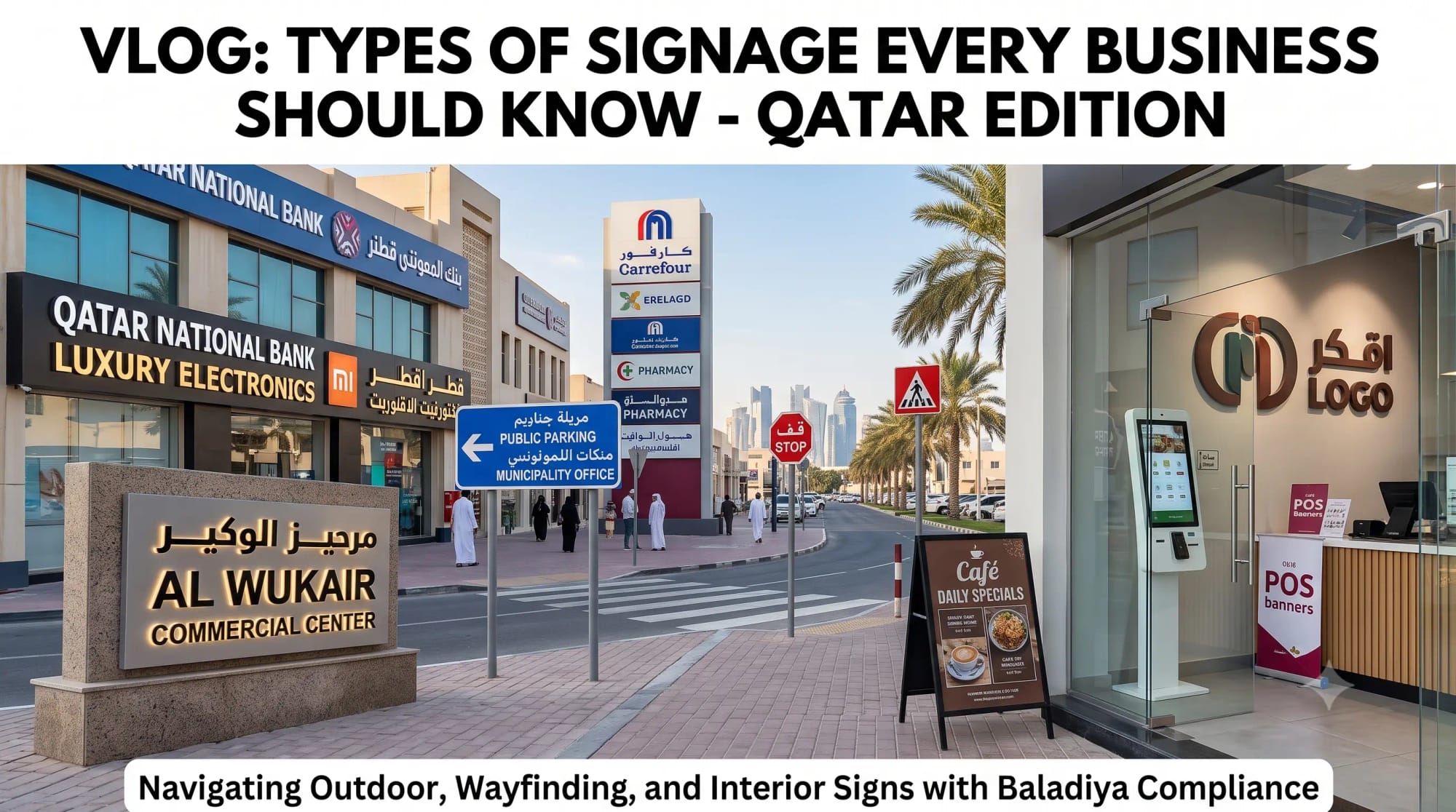
Signage is not one product. A business in Qatar will typically need several distinct types over its lifetime, and knowing which is which makes specifying and budgeting considerably easier.
1. Fascia and shopfront signage
The primary identification sign above your entrance. This is what most people mean by 'a shop sign'. Options run from flat printed panels through built-up 3D letters to fully illuminated channel letters. It is the highest-visibility sign you own and usually the one subject to landlord and municipality approval.
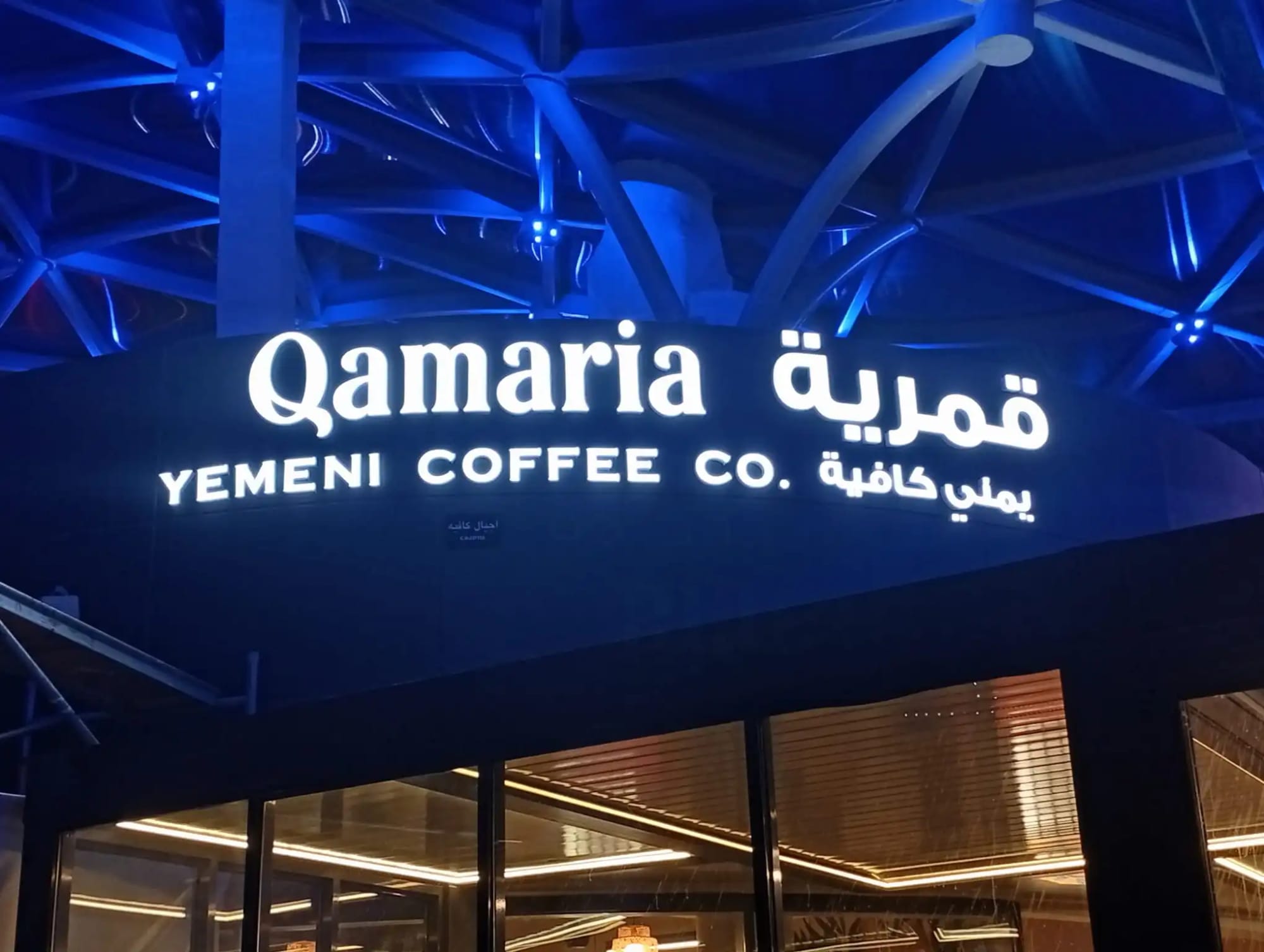
2. Illuminated and LED signage
Any sign with integrated lighting. Face-lit channel letters glow through an acrylic front. Halo-lit (reverse-lit) letters throw light onto the wall behind for a softer, more premium effect. Light boxes illuminate a whole printed panel evenly. Illuminated signage extends your visibility into the evening, which in Doha covers a large share of trading hours.
3. 3D letters and built-up lettering
Individual dimensional letters mounted directly to a wall or fascia, in acrylic, stainless steel, brass or aluminium. They read as more considered than a flat panel and are the default for corporate receptions and premium retail.
4. Wayfinding and directional signage
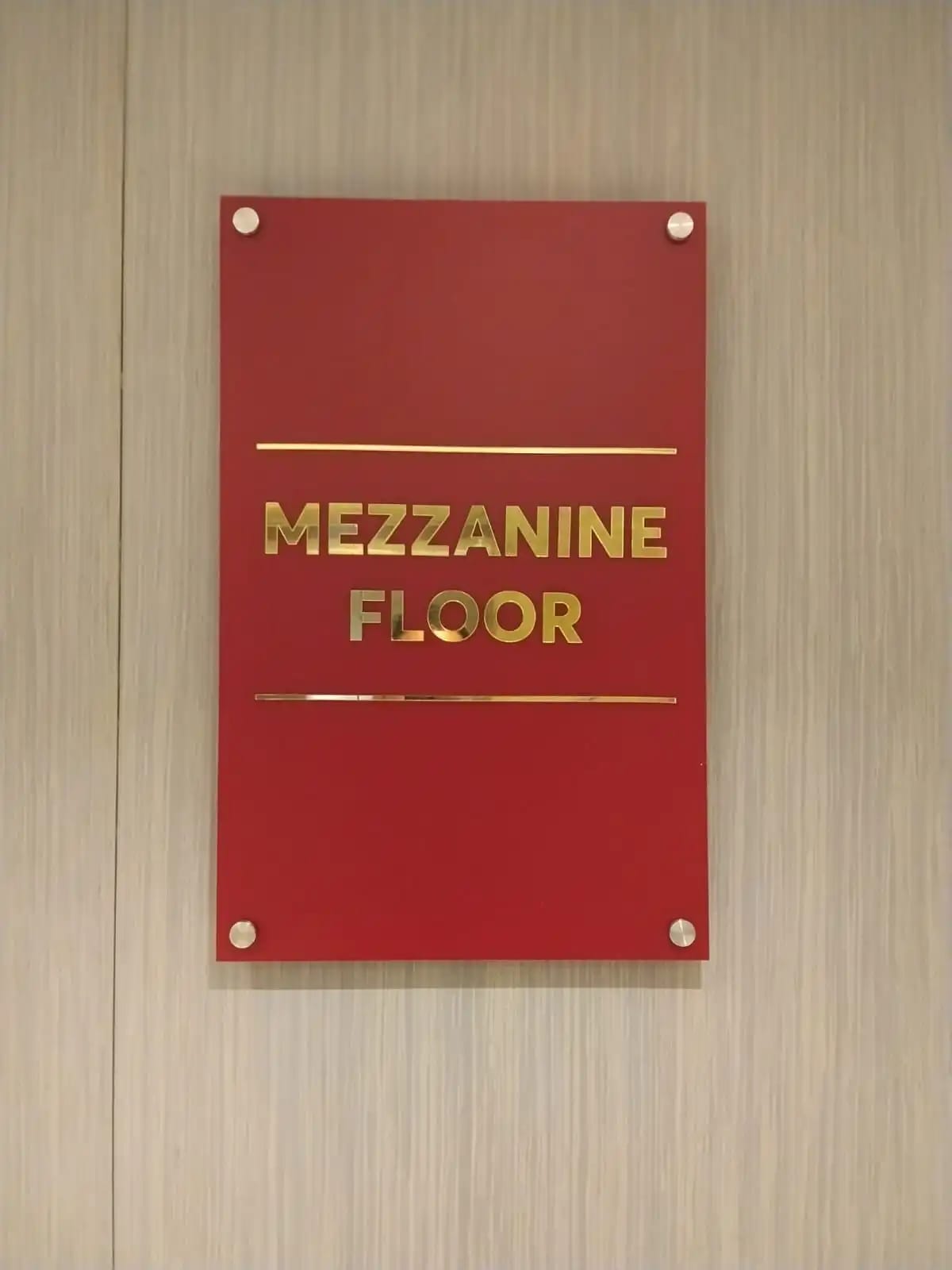
Systems that help people navigate a building or site — directories, floor identification, room numbering, directional arrows. Wayfinding is a system rather than a set of individual signs: consistency of typography, colour and placement is what makes it work. Bilingual Arabic and English is a legal requirement in Qatar and an accessibility necessity.
5. Safety, hazard and statutory signage
Fire exits, PPE requirements, hazard warnings, assembly points. These follow established colour and pictogram conventions rather than your brand palette, deliberately, so they are recognised instantly. Bilingual text plus pictograms is essential given Qatar's multilingual workforce.
6. Road and traffic signage
Regulatory, warning, mandatory and guide signs for roads, car parks and construction sites. In Qatar these must meet the Qatar Construction Specification and Ashghal requirements, including specified retroreflective sheeting grades and legend heights. This is regulated work, not decorative signage.
7. Vehicle and fleet graphics
Full wraps, partial wraps, cut vinyl lettering and magnetic panels. A branded fleet generates continuous impressions across Doha with no recurring media cost.
8. Interior and environmental branding
Reception logos, wall graphics, glass manifestation, window vinyl and hoarding. This is signage read at close range, so material and finish quality matter more than raw legibility.
9. Exhibition and temporary signage
Roll-up banners, pop-up displays, modular stands, mesh banners and event backdrops. Designed for repeated assembly and transport rather than permanent installation.
10. Pylon, monument and totem signs
Free-standing structures identifying a site from a distance — common at industrial premises, car showrooms, compounds and petrol stations. These are structural work requiring foundations and, frequently, engineering sign-off.
Which do you actually need?
Most businesses start with fascia signage and interior branding, then add wayfinding as the premises grow and vehicle graphics as the fleet expands. If you are fitting out a new space, involve a signage fabricator during the fit-out rather than after — power routing, wall substrates and fixing points are far cheaper to get right before the finishes go on.
We manufacture every category above in-house in Doha, including road signage to Ashghal standard.
Frequently asked questions
What is the difference between face-lit and halo-lit signage?
Face-lit channel letters glow through an acrylic front, giving maximum visibility. Halo-lit (reverse-lit) letters project light onto the wall behind, creating a softer glow around the letter that reads as more premium.
Does signage in Qatar have to be bilingual?
Yes. Under Qatari advertising law the primary language of a sign must be Arabic, with other languages permitted alongside it. Wayfinding and safety signage should be bilingual for accessibility as well as compliance.
When should I involve a signage company in a new fit-out?
During the fit-out, not after. Power routing, wall substrates and fixing points are far cheaper and cleaner to get right before the finishes go on, and it avoids surface trunking and patch repairs later.