Qatar Signage Law: Arabic Language & Permit Requirements Explained
Most signage disputes in Qatar are not about design. They are about language and permits, and both are governed by published law rather than by the preference of an individual inspector. Getting this wrong is expensive: businesses have been fined and, in the worst cases, ordered to remove installed signage entirely at their own cost.
Arabic must be the primary language
Under Law No. 1 of 2012 on the Regulation and Control of the Placement of Advertising, the primary language of an advertisement must be Arabic. Other languages are permitted alongside it, subject to controls set by the competent municipality. This is not a new principle — it carried over from Law No. 4 of 1980, which required the principal language to be Classical Arabic.
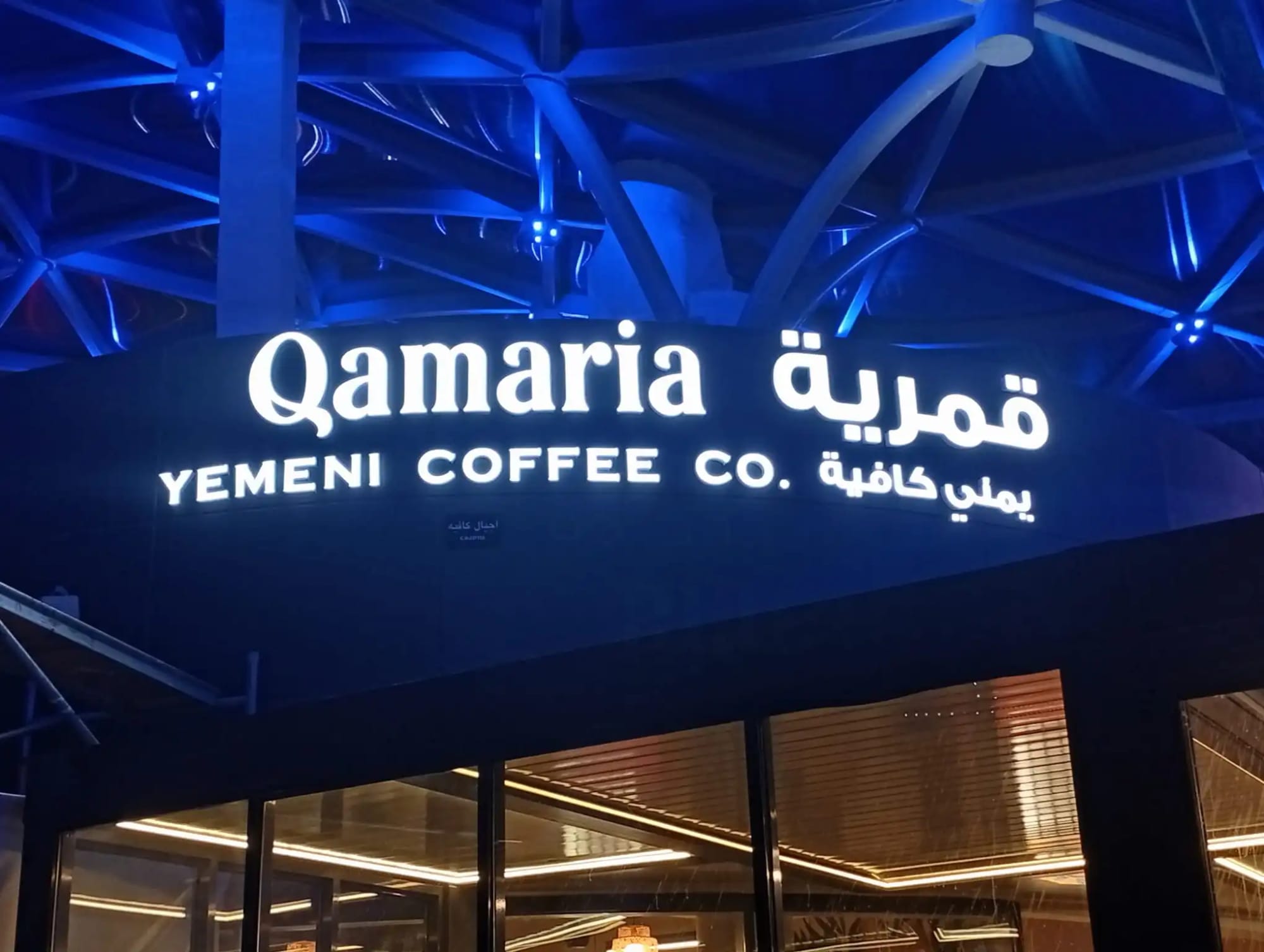
Law No. 7 of 2019 on the Protection of the Arabic Language tightened this further at company and trademark level. All company names must be in Arabic, and well-known foreign names must be accompanied by an Arabic version. Foreign trademarks may be used provided the Arabic version is placed in a clear position near the original language, and this explicitly applies to shops, signboards and products. According to Al Tamimi & Company's analysis, non-compliance is punishable with a fine not exceeding QAR 50,000.
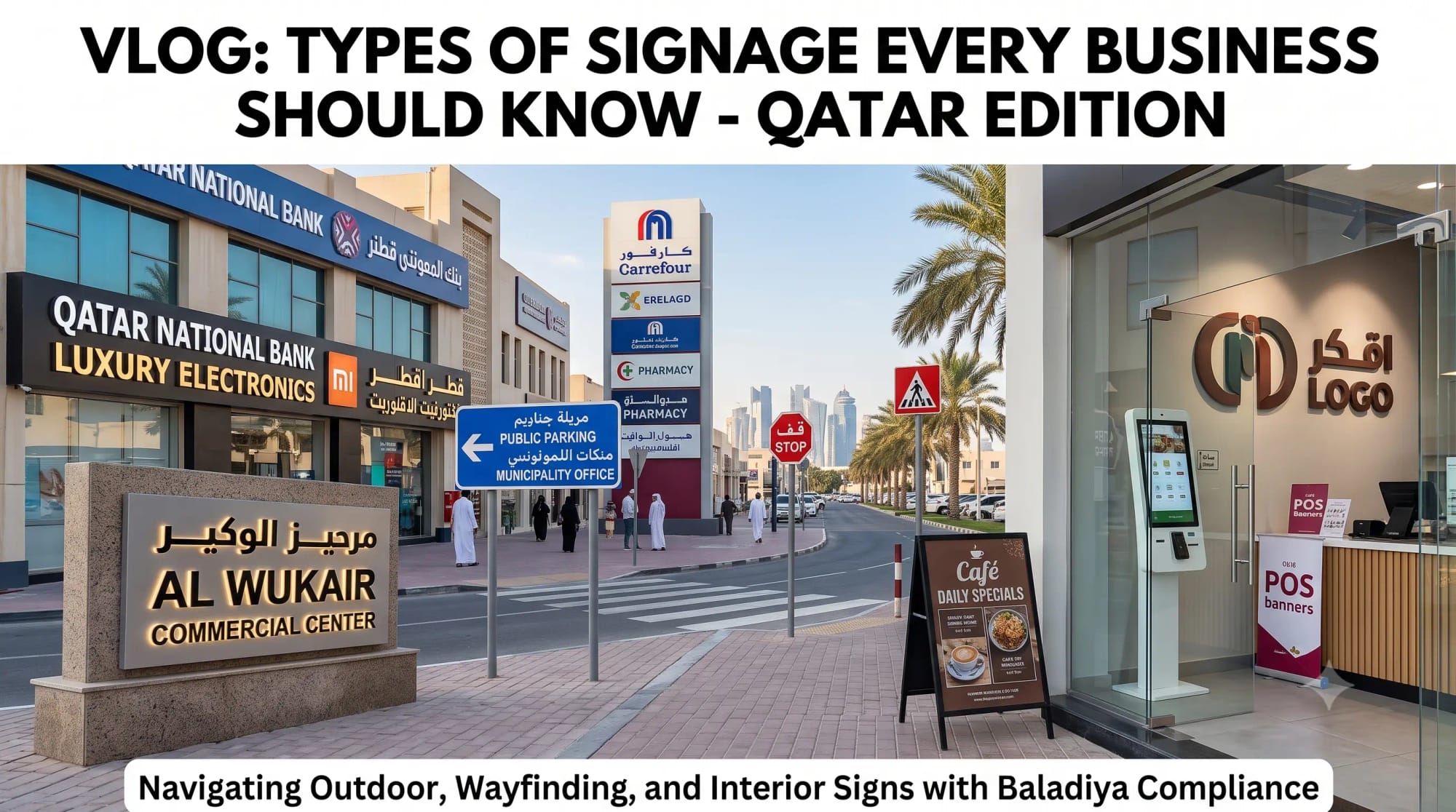
The practical reading for a shopfront: your Arabic text cannot be a small subtitle tucked under a large English name. It needs genuine visual parity. The Ministry of Municipality's advertising guidebook asks for signboards to be visually balanced between Arabic and English with accurate translation.
Transliteration versus translation
This is where most brands stumble. A brand name is usually *transliterated* — rendered phonetically in Arabic script so it sounds the same — rather than *translated* into its literal meaning. A café called "Golden Spoon" generally wants the Arabic to read as the brand, not as the words for gold and cutlery. Descriptive text underneath, such as "Restaurant & Café" or "Dental Clinic", is genuinely translated.
Machine translation is the single most common cause of embarrassing signage in Doha. Automated tools regularly break Arabic letter joining, reverse word order, or pick a wrong-register synonym. Arabic is a cursive script where letters change shape by position, and design software that is not Arabic-aware will silently render disconnected letterforms that read as gibberish to any Arabic speaker. Always have final artwork checked by a native reader before fabrication.
You need a municipality permit
No advertisement may be placed without a licence from the competent municipality and payment of the prescribed fees. This covers fixed, portable, traditional and electronic signage, whether temporary or permanent. It also covers vehicle stickers — fleet branding is advertising in the eyes of the law.
Reporting by The Peninsula quoted the Technical Affairs Department describing permit processing as a roughly fifteen-minute task, while noting that shops were nonetheless being fined for unpermitted advertising during inspection campaigns. The friction is rarely the permit itself; it is not knowing one was required.
Other licensing conditions worth knowing
Law No. 1 of 2012 also requires that a sign must not resemble traffic signs or signals in size, form or colour; must not obstruct traffic, pedestrians, traffic lights or rescue operations; must not block ventilation or visibility for building occupants; must not harm the aesthetics of the area; and must not exceed the dimensions specified by the municipality. Where the sign sits on land or a building the applicant does not own, written owner approval is required.
Advertising is additionally prohibited on places of worship, buildings of archaeological or historical character and their surrounding walls, trees and plant containers, and traffic signboards.
What this means for your project
Build permit time into the schedule rather than treating it as an afterthought, get the Arabic professionally set rather than machine-generated, and confirm landlord or building-owner consent in writing before fabrication starts. At Mars Sign & Craft we handle municipality submissions as part of the signage scope and typeset Arabic properly, because a sign that has to come down is more expensive than one that was specified correctly at the outset.
This article is general guidance, not legal advice. Requirements vary between municipalities and change over time — confirm current conditions with your competent municipality or a qualified advisor before committing to production.
Frequently asked questions
Does my shop sign in Qatar have to be in Arabic?
Yes. Under Law No. 1 of 2012, the primary language of an advertisement must be Arabic, with other languages permitted alongside it subject to municipality controls. Law No. 7 of 2019 additionally requires Arabic for company names and trademarks on signboards.
What is the fine for signage without Arabic in Qatar?
Non-compliance with the Arabic Language Law No. 7 of 2019 is punishable with a fine not exceeding QAR 50,000. Separately, unpermitted advertising has attracted municipality fines reported at up to QAR 10,000.
Do I need a permit for a shop sign in Qatar?
Yes. No advertisement may be placed without a licence from the competent municipality and payment of the prescribed fees. This includes permanent and temporary signage and vehicle stickers.
Should my brand name be translated or transliterated into Arabic?
Brand names are normally transliterated so they sound the same in Arabic, while descriptive wording such as 'Dental Clinic' is translated. Always have the final artwork verified by a native Arabic reader before fabrication.